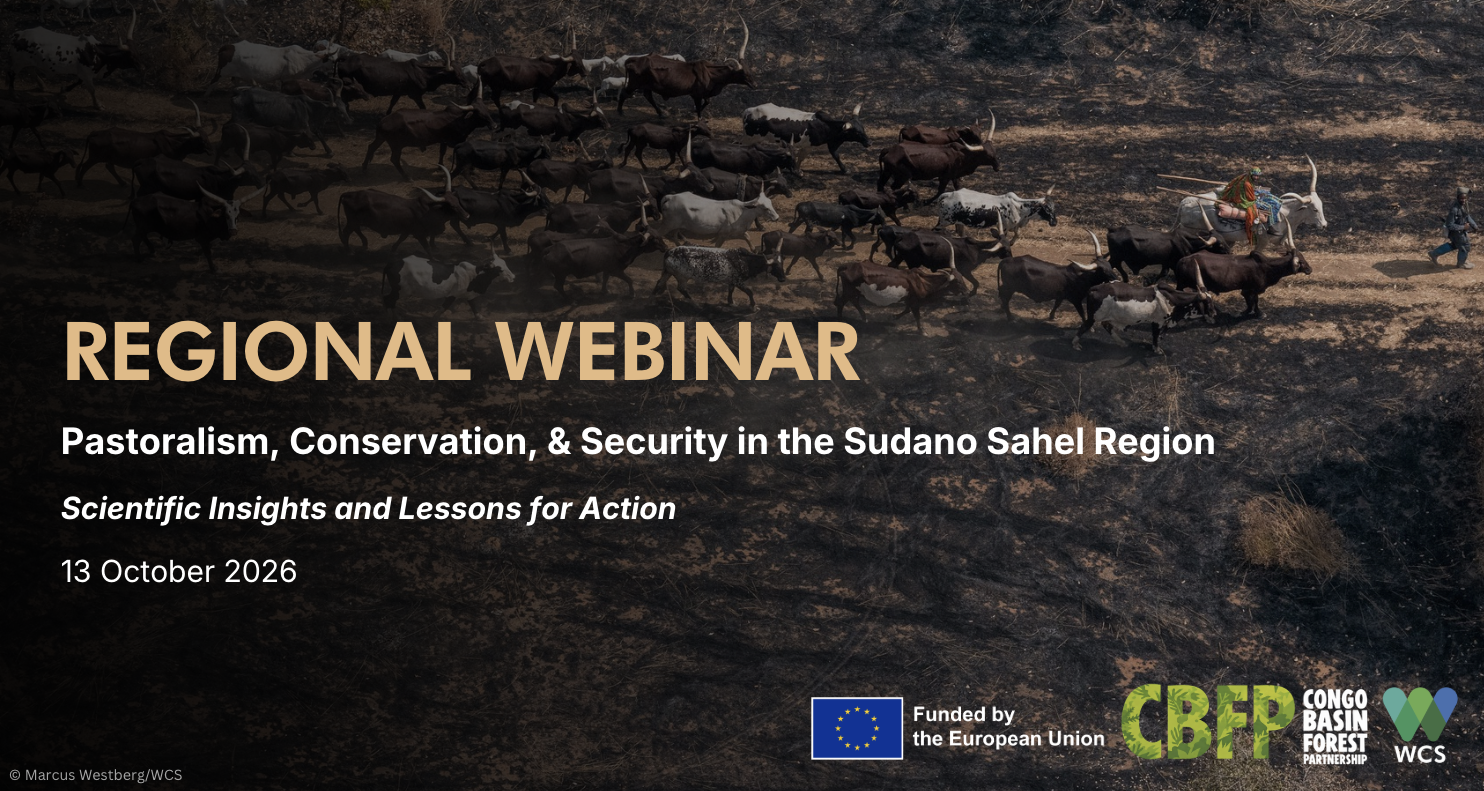
Regional Webinar
Pastoralism, Conservation, and Security in the Sudano Sahel Region
On October 13th, the Wildlife Conservation Society (WCS) and the Congo Basin Forest Partnership (CBFP) organised a regional exchange on the transformations of pastoralism and transhumance, their impacts on landscapes and protected areas, and emerging approaches to address these dynamics. The studies presented during the webinar were funded by the European Union (EU) through the initiative PAIRIAC (Programme d'Appui à l'Intégration Régionale et à l'Investissement en Afrique Centrale). WCS and the CBFP thank the EU for its continued support for the conservation and sustainable resources management in the Sudano Sahel Region.
The Sudano Sahel region is facing mounting pressures linked to agricultural expansion, the scarcity of grazing land, climate change, insecurity, and evolving livestock farming systems. The rise of "neo-pastoralism"—characterized by large herds owned by investors and managed by hired herders—exacerbates pressure on resources, increases the risk of overgrazing, and fuels tensions with traditional pastoral communities. At the same time, the decline of wildlife and habitat fragmentation threaten the ecological integrity of these landscapes.
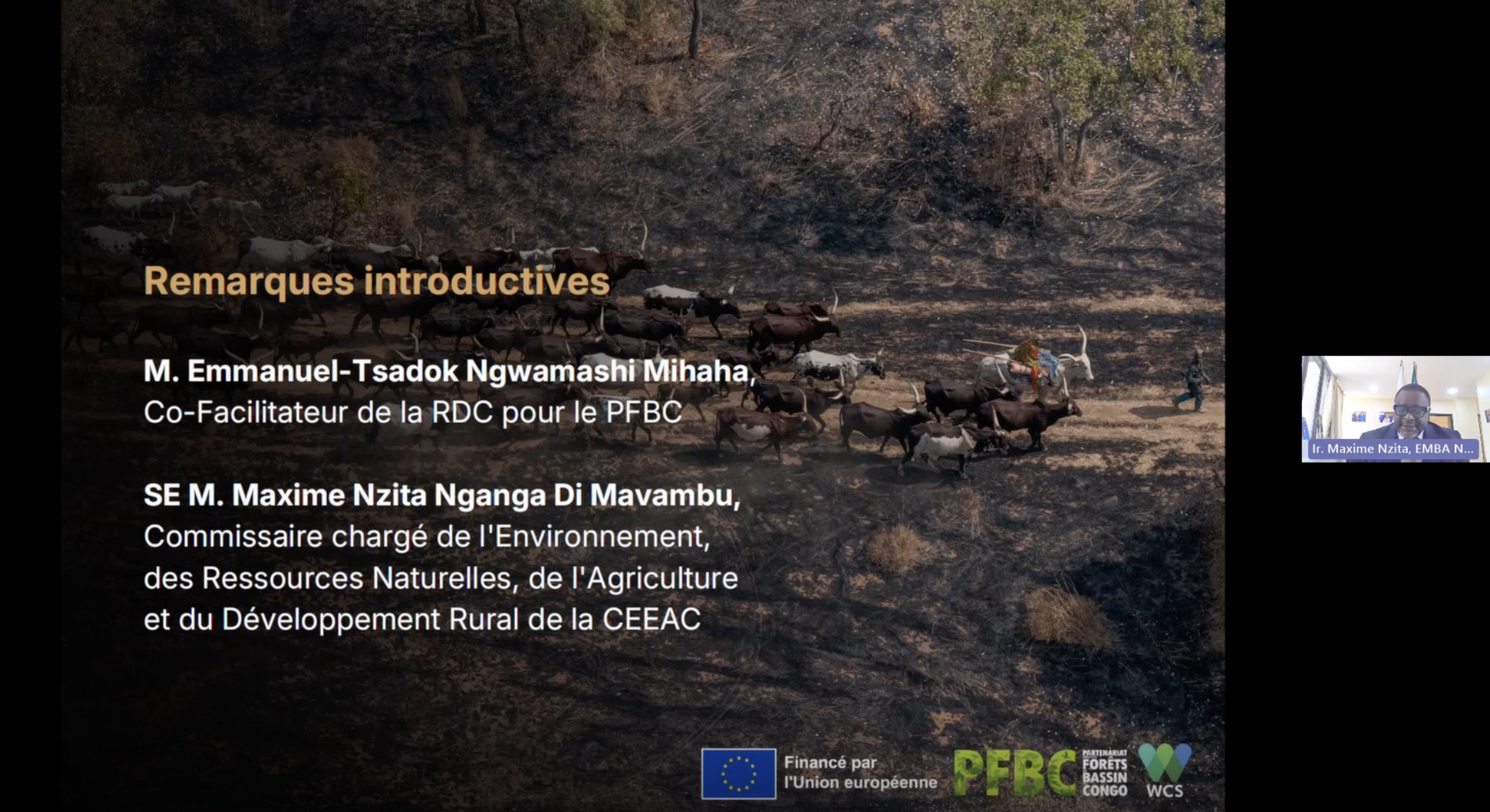
The webinar started with opening remarks by His Excellency Mr Maxime Nzita Nganga Di Mavambu, Commissioner in charge of Environment, Natural Resources, Agriculture and Rural Development of the Economic Community of Central African States (ECCAS), who reaffirmed ECCAS’s commitment to implementing the N’Djamena Declaration. The Declaration aims to strengthen the links between transhumance, natural resource management, protected area conservation, peace, security, and development. Lessons learned from the PAIRIAC initiative and discussions during the webinar were identified as valuable contributions to defining future operational priorities. Proposed areas for action include improving livestock trade between Chad, northern Cameroon, and the southern Congo Basin; strengthening conflict prevention mechanisms and dialogue with communities; and anticipating the potential impacts of El Niño across the region.
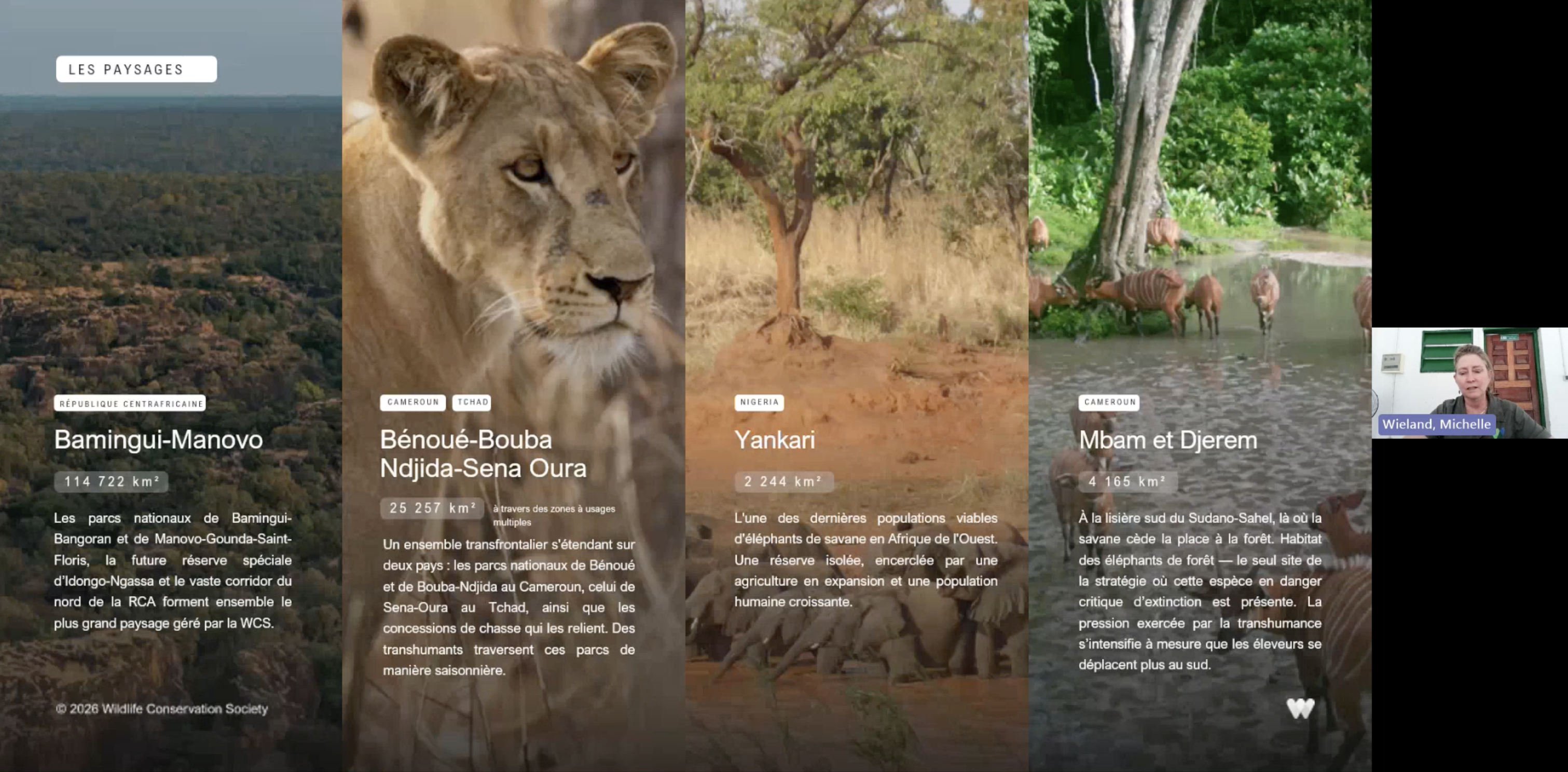
Michelle Wieland, Technical Director, WCS Sudano Sahel Region, presented the WCS Strategy "Connected Landscapes: Building a Resilient Sudano-Sahel Together with Pastoral Communities" (2025–2030), which aims to preserve the biodiversity and ecological connectivity of the Sudano-Sahelian landscape while supporting resilient pastoral systems, sedentary communities, and sustainable coexistence with protected areas, in respect of pastoral rights and traditions. The approach rests on five interdependent pillars: the protection of national parks, the sustainable management of pastures and transhumance corridors, the strengthening of community resilience, the evolution of public policies, and conflict prevention and management. It distinguishes between sedentary agro-pastoral communities, transhumant herders, large-scale pastoral investors, and actors linked to organized crime, to tailor responses to the realities of each group. This strategy will be used across 7 different protected areas across WCS’s Sudano-Sahel Region.
Click here for the PPT presentation and click here to access the strategy.
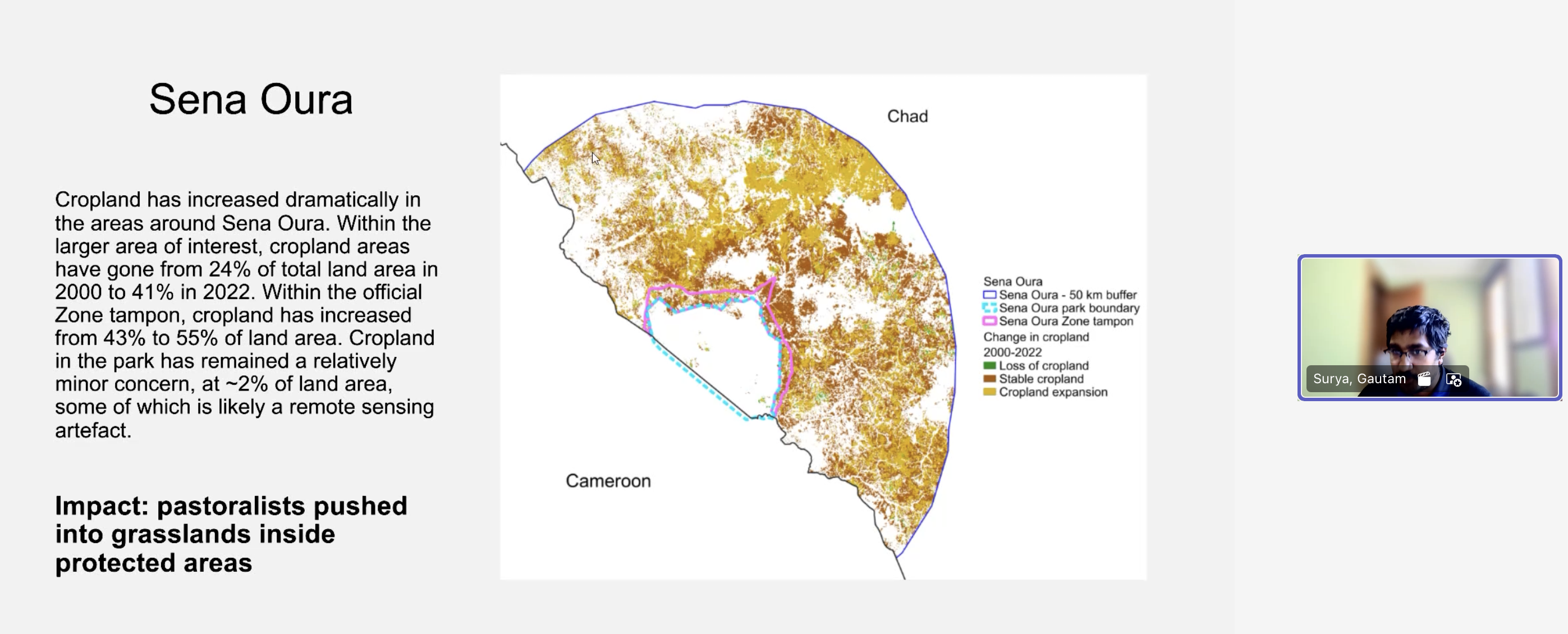
Gautam Surya, WCS Conservation Planning Scientist, presented on “Rangelands under Pressure: Satellite Analysis of Agriculture, Water and Fires”. The analysis used satellite data to show how agricultural expansion, fire regimes, and seasonal water availability are reshaping rangelands across key Sudano-Sahel landscapes. It highlighted that while cropland expansion remains limited inside most protected areas, rapid changes around parks are increasing ecological isolation and pushing greater pressure toward the remaining grasslands and dry-season water resources.
Click here for the PPT presentation.
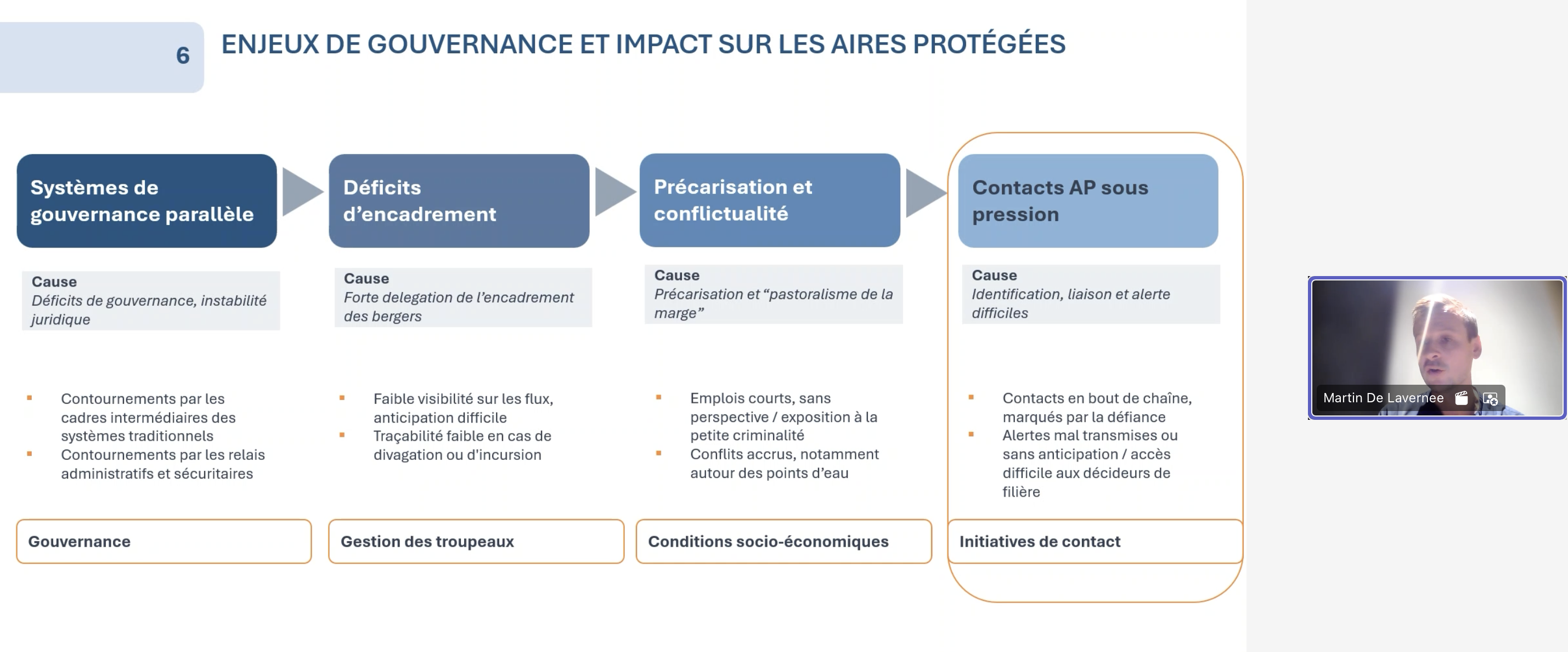 Martin de Lavernée, Project Lead, GIST, presented on “The Political Economy of Neo-Pastoralism and its Impacts on Protected Areas in Northern Cameroon and Chad”. The study analyzes how neo-pastoralism is reshaping livestock ownership and mobility around protected areas in northern Cameroon and Chad, with large herds increasingly owned by influential political, administrative, military, and economic actors and managed by salaried herders. It shows how these networks can bypass customary mediation and formal regulation, increasing pressure on protected areas and weakening local natural resource governance.
Click here for the PPT presentation and click here to access the study.
Christophe Bénard, IRAM researcher, presented the study on the administration and taxation of transhumant herders in the PAIRIAC implementation zone. The study analyzes the administration and taxation of transhumant herders in Cameroon, Chad, and the Central African Republic, specifically in border areas near national parks and protected areas. It is based on a comparison between the existing legislative framework and the actual situations encountered by herders (and livestock traders) during their movements. The proposed measures operate at several levels: training authorities and pastoralists in the law; establishing more efficient consultation mechanisms; better securing corridors; demarcating protected areas; updating legislation; and creating bodies to handle complaints (involving pastoralist organizations).
Click here for the PPT presentation and click here to access the study.
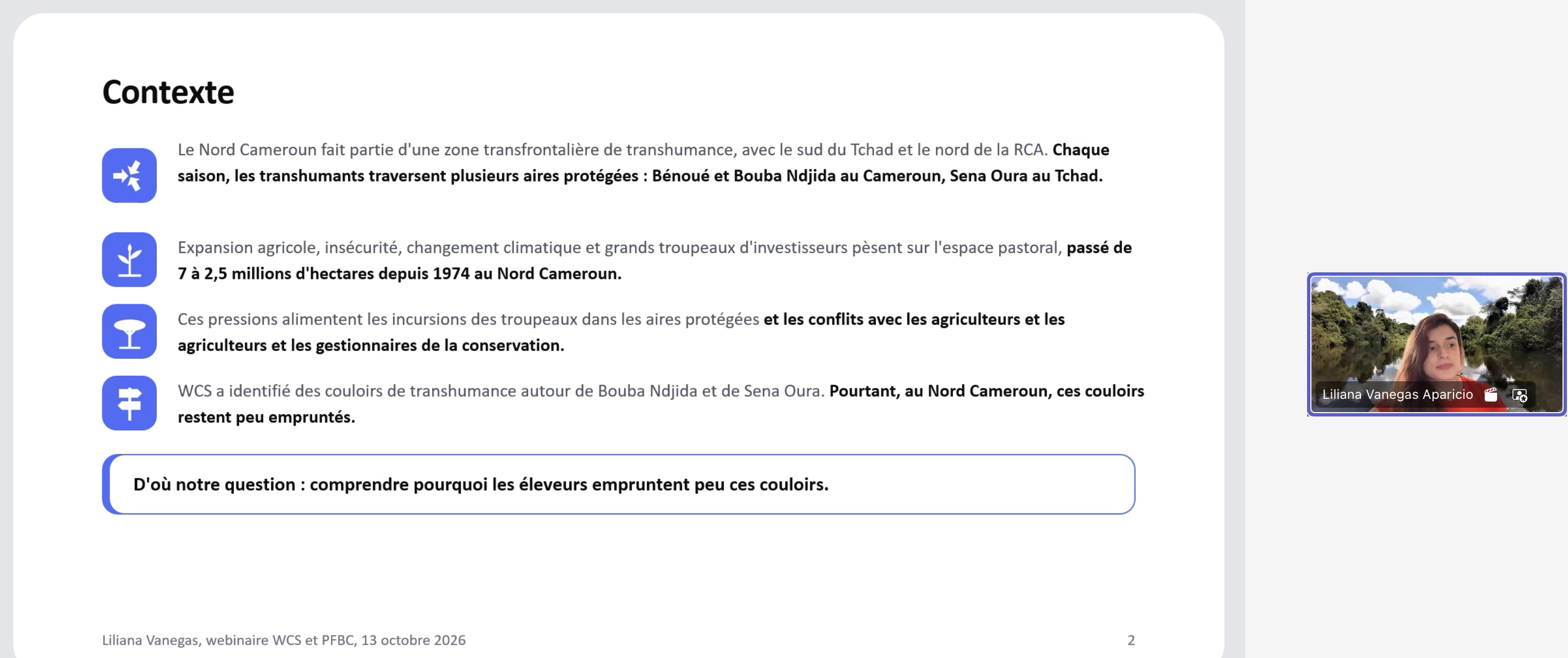
Liliana Vanegas, Independent Consultant, presented on “Transhumance Corridors and Protected Areas: Understanding Herders’ Choices to Design Behavioural Change Interventions”. In northern Cameroon, transhumance corridors have been identified, yet herders rarely use them—leading to conflicts with farmers and incursions into protected areas such as Bouba Ndjida. As part of the PAIRIAC project, funded by the EU and implemented by WCS, they conducted the first study using a behavior-change approach to understand why they do not use these corridors. The results show that transhumant herders choose their own routes within a network that is more complex than anticipated, involving their families, local authorities, and other intermediaries. Their avoidance of designated corridors stems from neither a lack of information nor a lack of willingness; these corridors are often occupied by cultivated fields, lack of water and pasture, and are unsafe.
Click here for the PPT presentation and click here to access the study.
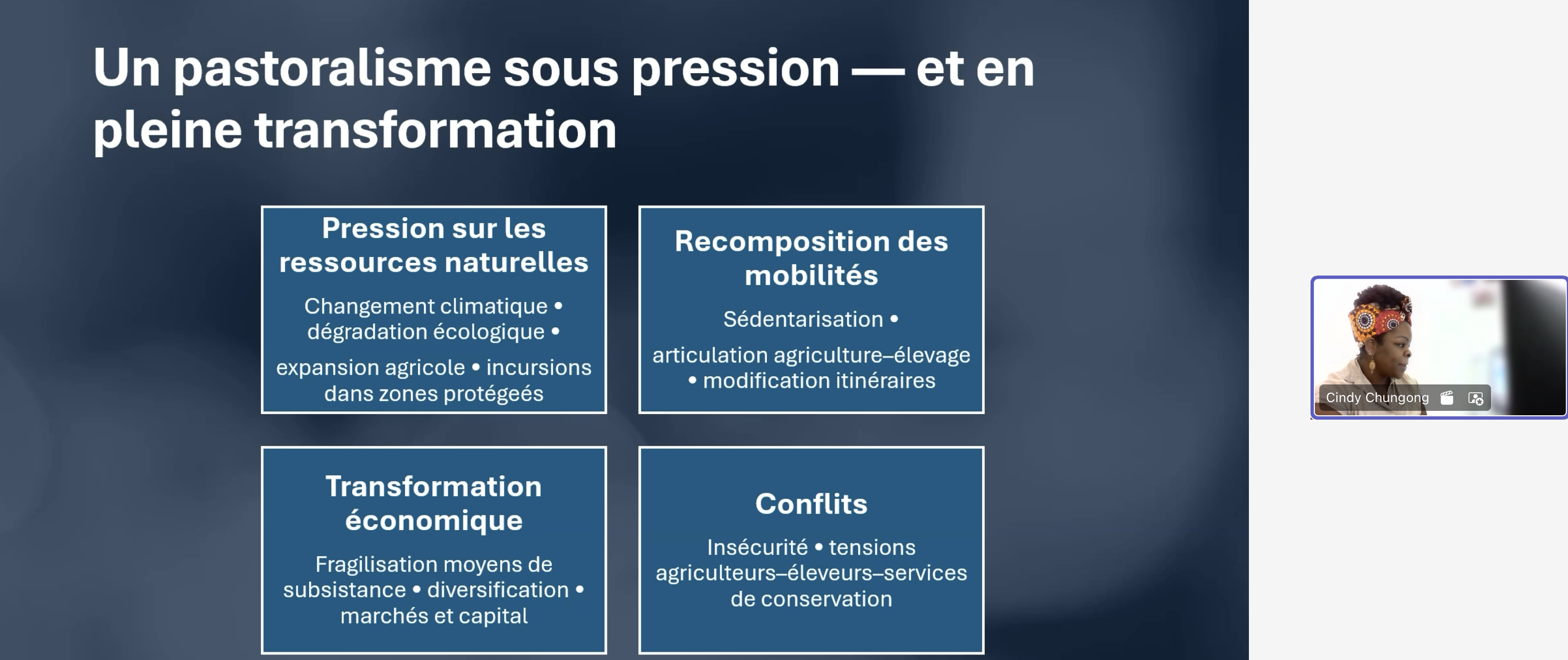
Cindy Chungong, Lead Consultant, Cindy Chungong Consulting, presented on “Pastoralism in Transition: What Are the Realities for Women and Youth in Northern Cameroon?”. Based on interviews, focus group discussions, participatory consultations, and case studies, the study analyzes power relations, livelihoods, vulnerabilities, and opportunities for the inclusion of women, youth, and transhumant herders. The results show that the natural resource governance framework remains fragmented and unevenly applied. Decisions are primarily controlled by older men and traditional authorities. Despite increasing participation by women and youth, their actual influence remains limited. Transhumant herders, particularly the Mbororo Fulani, face additional obstacles linked to their mobility and institutional marginalization.
Click here for the PPT presentation and click here to access the study.
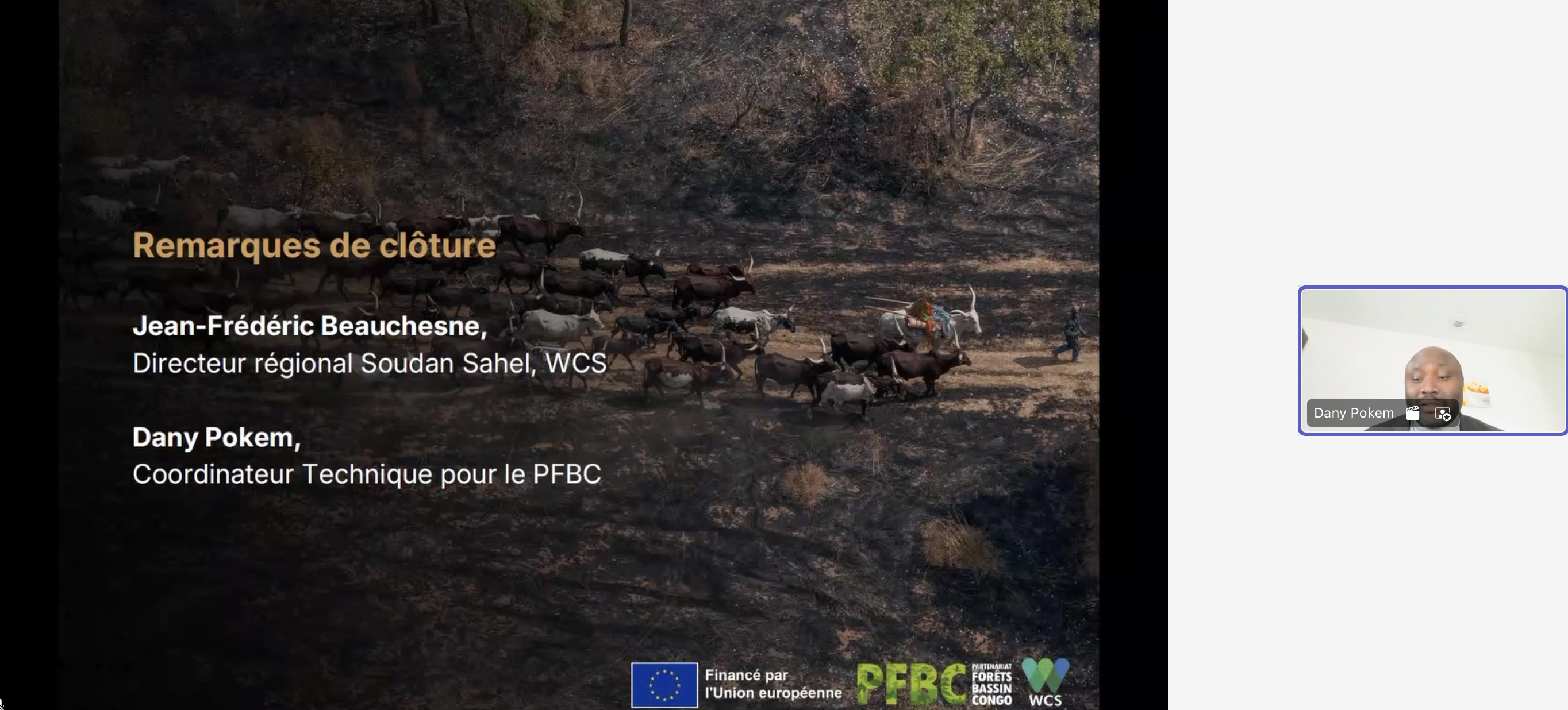
The webinar concluded with closing remarks by Jean-Frédéric Beauchesne, WCS Director Regional for Sudano Sahel, and Dany Pokem, Technical Coordinator for CBFP. Mr. Beauchesne warmly thanked the researchers for their insightful presentations and the European Union, whose support through the PAIRIAC project funded studies and field-based initiatives that contribute to a better understanding of transhumance and its interactions with conservation. Mr. Pokem reaffirmed CBFP’s commitment to implementing the N’Djamena Declaration, with the aim of reconciling pastoral mobility, ecosystem conservation, development, and peace. He called on governments, regional institutions, technical and financial partners, civil society and field actors to turn political commitments into concrete, funded actions that benefit communities, biodiversity and peace.