
WCS at the One Health Summit
The Wildlife Conservation Society (WCS) participated in the One Health Summit organized by the Governments of France and Ghana in Lyon from 5–7 April 2026 — a landmark global gathering that convened Heads of State and Government, leaders of international and regional organizations, parliamentarians, scientists, academics, private sector representatives, civil society, local authorities, and youth to accelerate implementation of the One Health approach.
WCS was represented by Dr. Chris Walzer, WCS Executive Director of Health, and Dr. Lucy Keatts, Associate Director, WCS Health Program. Both actively contributed to multiple sessions, including panel discussions and side events, emphasizing upstream prevention of emerging health threats and environmental dimensions of One Health:
- Scientific Day (6 April)
- PREZODE side event ( 6 April) — Preventing pandemics at source: a One Health approach, from local to global
- Civil Society Session (7 April) — organized by the One Sustainable Health (OSH) Forum, and which resulted in the adoption of a Civil Society Position Statement on One Health.
- One Sustainable Health (OSH) Factory (8 April)
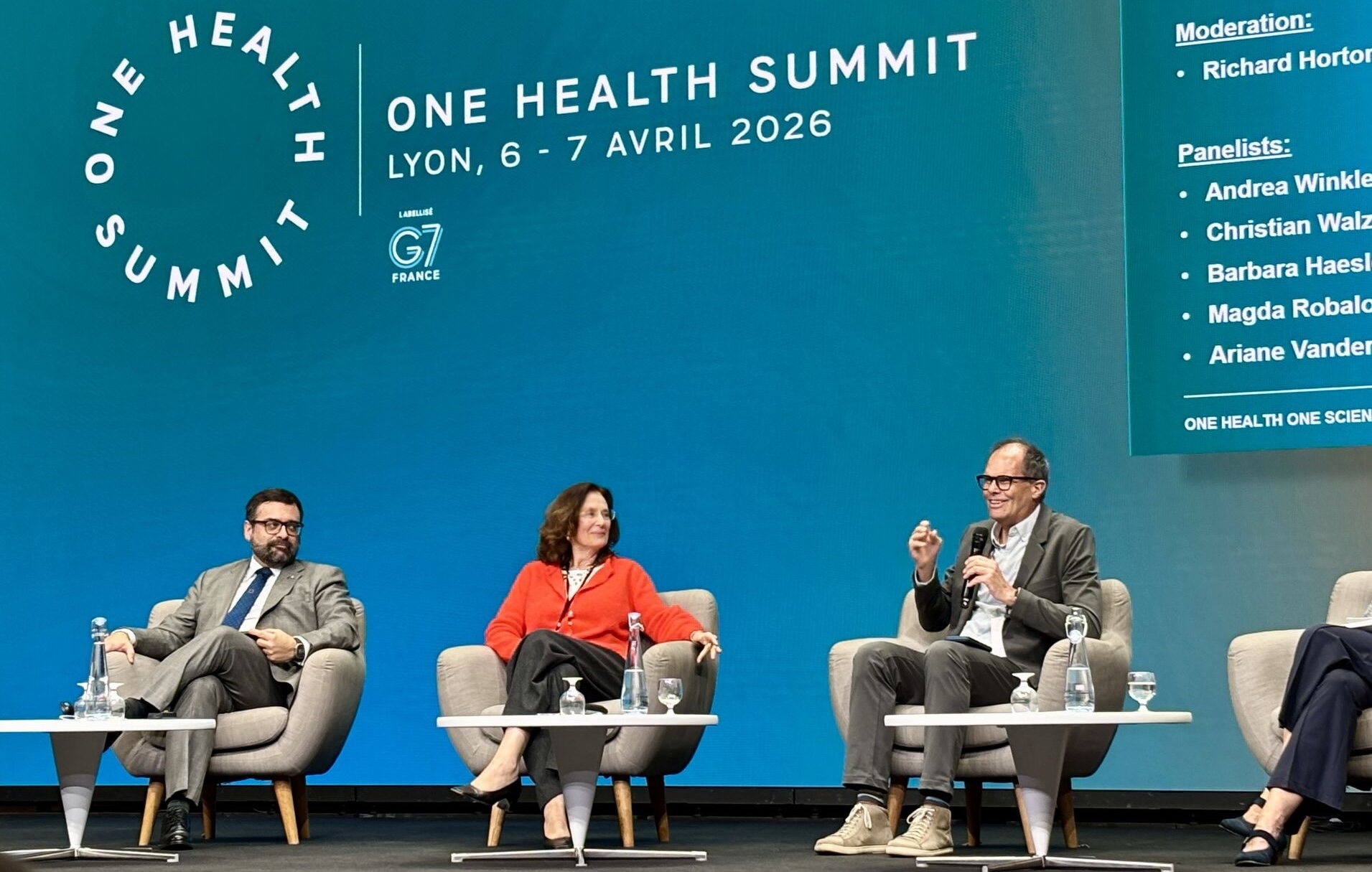 Dr. Chris Walzer, WCS Executive Director of Health, speaking on a panel at the One Health Summit.
Longstanding Leadership in One Health
WCS helped pioneer the One Health movement and continues to lead in its evolution, drawing on more than a century of veterinary expertise, field-based wildlife disease surveillance, conservation action, community engagement, and groundbreaking research on the interconnections between human, animal, and ecosystem health and well-being.
In 2004, WCS convened the first-ever 'One World, One Health' symposium in New York City, which was attended by health experts from around the world. The Manhattan Principles were formalised – calling for recognition of “the essential link between human, domestic animal and wildlife health and the threat disease poses to people, their food supplies and economies, and the biodiversity essential to maintaining the healthy environments and functioning ecosystems we all require”. In October 2019, the Principles were updated as the Berlin Principles at the ‘One Planet, One Health, One Future’ Conference, convened by the Climate and Environmental Foreign Policy Division at the German Federal Foreign Office in partnership with WCS. The event brought together nearly 200 individuals from government, academia, policy and civil society.
WCS is proud to be an active member of the PREZODE initiative and the International Alliance against Health Risks in Wildlife Trade, and to contribute to their ongoing implementation and success. WCS has also been named a new World Organisation for Animal Health (WOAH) Collaborating Centre, reflecting our global leadership in wildlife health, biodiversity conservation, and One Health.
Strengthening the Environmental Pillar
Throughout the Summit, WCS emphasized the need for greater integration of the environmental pillar within One Health. The conservation, restoration, and sustainable management of ecological integrity are fundamental to preventing disease emergence, safeguarding biodiversity, securing water and food systems, supporting livelihoods, and strengthening resilience to climate change. Strengthening the role of the environment sector and primary prevention is therefore critical to addressing the shared drivers of the current global polycrisis of biodiversity loss, climate change, environmental degradation, food insecurity, and emerging infectious diseases.
The science is clear that the growing risk of zoonotic disease emergence and pandemics is directly related to increasing contact among wildlife, livestock, and humans driven by land-use change and the exploitation of wildlife exploitation. Key drivers include the destruction of high-integrity ecosystems, deforestation and forest degradation, the trade and sale of live wildlife in urban markets, and certain wildlife farming practices.
Pandemic prevention at the source—addressing the drivers and reducing the risk of pathogen spillover among people, wildlife, and other animals before it occurs—remains the most effective and cost-effective strategy to avert future epidemics and pandemics.
Achieving meaningful progress in prevention will require moving beyond a reactive approach to health threats and investing in upstream interventions that address the environmental drivers of risk before outbreaks occur. Recognizing ecological integrity as a foundational element of primary prevention and resilient ecosystems as critical health assets will generate co-benefits across the entire One Health spectrum.
Increased Investment in One Health
It is essential that governments, health and development institutions, and global funding instruments, such as the Pandemic Fund, place greater emphasis on primary prevention at the source, investing in actions that address environmental drivers of disease emergence and support ecological integrity. Increased investment is also needed in civil society organizations and communities delivering on-the-ground conservation and prevention actions at critical wildlife–livestock–human interfaces.
Such investments not only reduce the risk of future epidemics and pandemics but also contribute to advancing multiple Sustainable Development Goals (SDGs), including health, climate action, life on land and below water, food security, and poverty reduction."
Lyon Commitments for Health for All Life and the Planet
WCS welcomes the official “Lyon Commitments for Health for All Life and the Planet. and their recognition that effective One Health implementation must address the interconnected challenges of disease emergence, biodiversity loss, climate change, environmental degradation, pollution, and antimicrobial resistance. We are particularly encouraged by the commitments' emphasis on prevention, science-based decision-making, cross-sectoral collaboration, and the need to address the environmental drivers of health risks.
Delivering on these commitments will require sustained investment in upstream approaches that prevent disease emergence before outbreaks occur, strengthen wildlife health systems, conserve and restore high-integrity ecosystems, and support the organizations and communities implementing solutions on the ground. By placing ecological integrity at the heart of One Health, the international community has an opportunity to reduce future pandemic risk while advancing broader goals for biodiversity conservation, climate resilience, food security, and sustainable development.
WCS deeply thanks the French Government for their visionary leadership on One Health. We look forward to continuing the close collaboration with France and all of our partners with a shared vision: building a world where wildlife thrives, ecosystems flourish, and the health of all life on the planet is protected.